

I know multiple 40-somethings who are more on trend and plump-faced than their teenage children. They have six-packs you can bounce a quarter off of, and possess the resting heart rates of Olympic athletes. And with the confidence, presence, and unassailable resumés of people who have occupied, then ditched C-suites for greener pastures.
Like these hard-charging wünderkids, St. George Spirits is, at 44, is at once doe-eyed-and youthful, with the wisdom and experience that comes with middle age.
As established, successful craft icons, the team frequently gets approached for tips on, essentially, how to do what they did, from up-and-comers.
“I get new brands that approach me with a completely polished book, beautiful bottles, incredible branding,” says Lance Winters, master distiller, and the creative force behind St. George. “They come asking for advice. The branding is beautiful, and I tell them that. But then when I ask them about what their actual product is like, they tell me don’t know. That’s what they come to me for.”
But inspiration and vision can’t come from a manufactured Pinterest board—or even one talented guru’s paint-by-the-number instructions.
Brands are designing book covers, but they don’t have a real narrative, plot. They don’t even have the main character.
“There is so much built on a solid foundation of bullshit,” Winters says. “I think what’s given us staying power is that we have always been distiller owned and operated. We have always only created products that we personally want to drink. We create things from raw materials to satisfy our own curiosity and palates, not a ‘market.’”
Everything Is Here for a Reason
At St. George, every product exists for a reason—much to the delight of bartenders and mixologists.
“I could spend hours waxing poetic about how good St. George’s portfolio is, how proud I am to serve their products, and how easy it is to get my bartenders to fall in love with these bottles,” says Mark Mentzel, bar manager at Atlas Restaurant Group in Baltimore, MD. “I’ve had the privilege of speaking with Lance and Dave several times and each encounter reinvigorates my creativity behind the bar, and motivates me to leave bartending behind to become a distiller. Their passion is infectious; their curiosity is admirable; their pursuit of damned delicious spirits is what I want to live up to.”
The pursuit of “damned delicious spirits” over market share isn’t just a good place to be: it’s necessary. Amid declining consumption, and rising costs for producers, this is one of the most historically challenging periods in the history of spirits production—and the only way to win new palates is through pure, good juice.
According to the American Craft Spirits Association, the total number of active U.S. craft distiller dropped by 787, or 25.6%, year-over-year at last count.
Is it discouraging? Of course.
“Some of the recent closures have been shocking, in spirits and beyond,” Winters admits. “For me, Anchor Brewing Company’s closure was one of the most personally upsetting. Not just because I loved their beer and it was an iconic Bay Area brand—it was an iconic U.S. craft brand. After they sold to Sapporo, it wasn’t the same.”
Like many other diehard Anchor fans, he was chuffed to discover that Chobani founder and CEO Hamdi Ulukaya hopes to reopen Anchor in all of its historic glory.
“When that happens, I think it will restore some of my faith in humanity,” Winters says, tongue partially—but not completely—in cheek.
Ahead of the Curve
But St. George—or rather, the people who run it—has always been right ahead of the trend curve, while simultaneously staying true to its foundational DNA.
The company was created in Alameda, CA, in 1982 by Jörg Rupf, was one of less than 20 U.S. distilleries at the time. In many ways, St. George’s evolution inspired and guided the American craft-distilling movement. Today, there are 2,000+ distilleries, many of whom intentionally or not, play tribute to St. George’s Spirits.
Winters joined in 1996, and became a 25% owner-operator, until he bought out Rupf in 2010 so he could retire. (Dave Smith, head distiller, now owns 25%).
Initially, Rupf only intended to create exceptional eau de vie with local California ingredients, and classic European distillation techniques.
“I told him upfront that I was most interested in creating a Single Malt Whiskey,” Winters says. “When I first joined, I jumped right into eau de vie, then had six months to experiment on the whiskey project, between fruit seasons. And then it was eau de vie time again.”
And then, in true St. George fashion, while the initial outlay of whiskey was in barrel, Winters and Rupf took a left turn that neither of them anticipated—and it led to the discovery and launch that (still) allows them to be the audacious, flavor-chasing mad scientists they all are today.
“I was in market with our distributor and saw this absolute proliferation of flavored vodkas, and it was clear they were selling,” Winters says. “But they were terrible. They were basically air freshener versions of whatever fruit was on the label. And meanwhile we were making incredible eau de vie from real fruit that wasn’t selling.”
Winters and Rupf put their heads together, and decided to do something wild: make an authentic flavored vodka from real fruit. In other words, create a work of art—that would actually sell.
The rest is cocktail history. The offshoot—Hangar One—was wildly successful. The sale of that branch to the Jersey-based Proximo Spirits in 2010 ensured that Winters, and Smith, could frolic through whatever wild, fruit-scented fields their palates dreamed up. And Rupf could retire.
Driven by Scent, Flavor, Experience
The creative process at St. George is akin to what I picture a Salvador Dali adopting in a particularly whimsical, madcap mood.
“I’ll never forget picking my son up from summer camp, and just smelling the hills and the forest and the orchards around mountains in Northern California,” Winters recalls. “I said to myself, ‘I need to distill this experience. This scent. This memory.”
The Proustian project was hard for Winters to wrap his mind around at first.
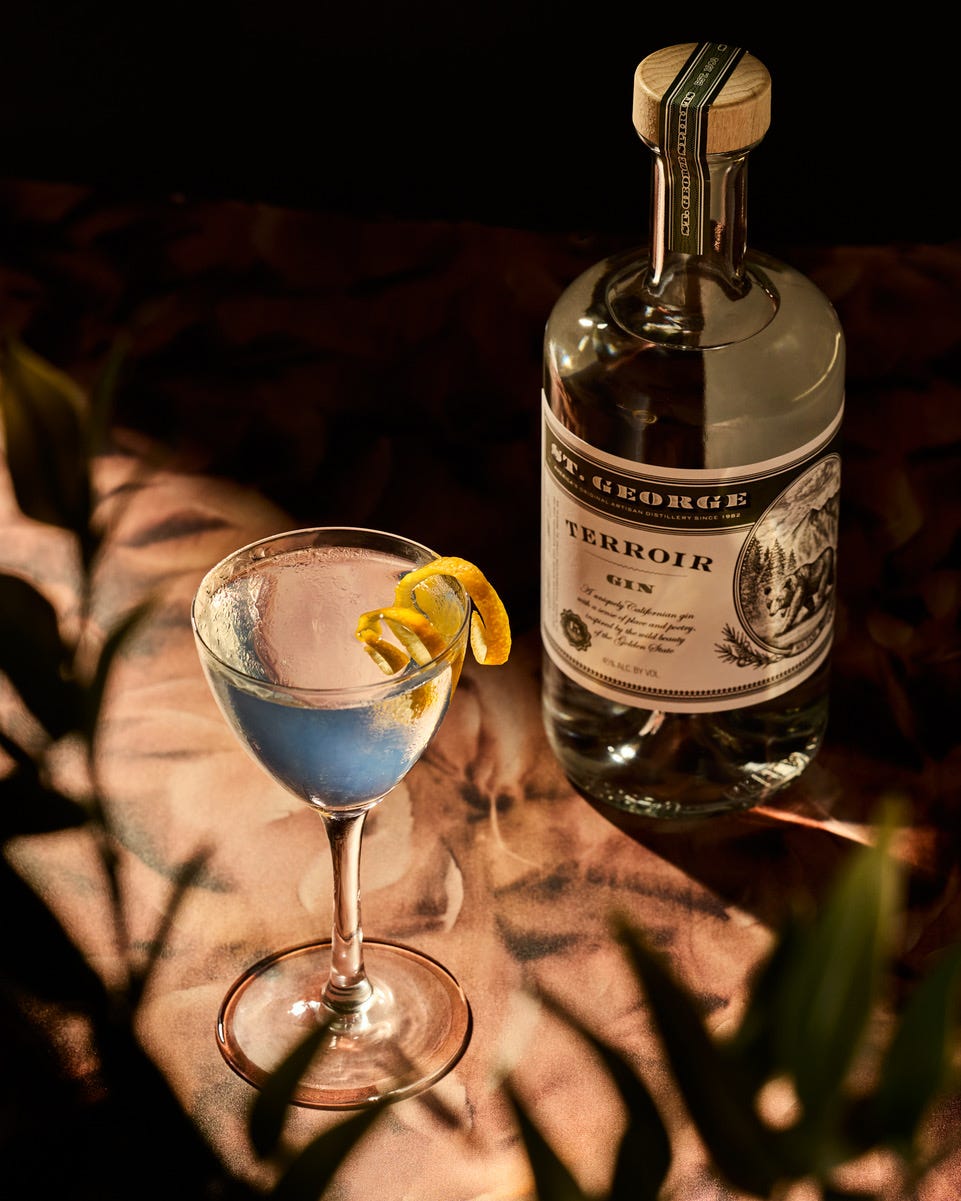
“I had no idea what I’d turn it into, not even the first clue,” he says. “But then, the aromas of Douglas fir, the forest, it started to become juniper in my mind.”
Presto, Terroir Gin was born.
Terroir Gin is one of my personal favorites, but it seems every industry pro and mixologist has a different one. (St. George currently produces 19 SKUs).
“I was fortunate enough to be introduced to St. George at the beginning of my craft cocktail journey 18 years ago, and it still holds up as a leader in the spirits industry,” says Jessy Erickson, of Eberly in Austin, TX. “I particularly love working with their NOLA Coffee Liqueur because the chicory adds that next-level flavor to any cocktail.”
And for many tenders of bar (and writers of words about the industry), St. George makes great stuff. But it also is … great stuff. It represents what so many in the craft drinks business has lost hold of, or never knew enough to become acquainted with in the first place.
“From award-winning single malt whiskies to prolific American gins and modern eau de vies, St. George Spirits’ dedication to the craft speaks for itself,” says Ashley Vesci, of Acacia in Pittsburg, PA. “But as a bartender I have always most admired their ability to consistently produce products that stand out amongst the rest while still being true to the heart of hospitality. Everything they put out represents the character of their company, and they truly make it easy on bartenders to create great drinks.”
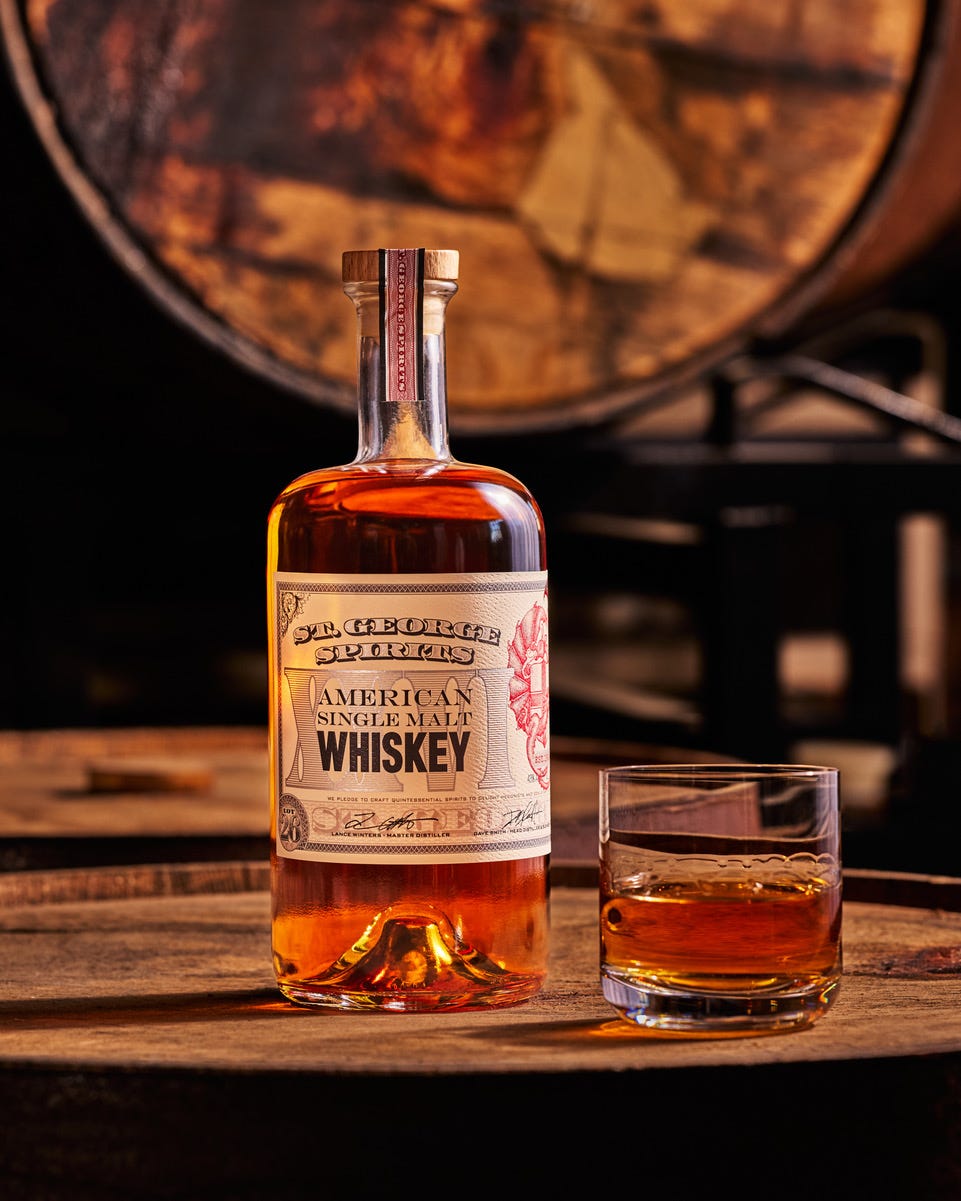
The latest drop? The 26th annual release in the American Single Malt Whiskey lineup. This utilizes various roast levels of two-row barley (pale malt, crystal malt, chocolate malt, black patent malt) and Bamberg malt (unfrosted barley smoked over beech and alder wood). The oldest single cask in the Lot spent 11.5 years on oak, and was originally distilled in 2000. The youngest cask is 5.
The Lot reflects decades of craftsmanship, innovation, vision, and passion. It is what helped, arguably, create a new legal category in spirits: American single malt whiskey. It’s royalty: dark chocolate and tahini, buttered pastry, a cedar grove in the summer.
Lot 26 is an amber glass of s’mores + a campfire—the childhood joy without the smoke, projected into adulthood.
Wonderful! You captured the heart of it.
Long time fan of St-George’s Spirits! 🤩